Friday, March 16, 2012

Cultural Face Painting


Tribal or Cultural Face Painting has been used for many motives. For hunting, religious reasons, and military reasons (mainly as a method of camouflaging) or to scare ones enemy. Several tribal fighting techniques were calculated to strike terror. Some warriors entered battle naked except for a loin cloth, but their bodies were streaked in bizarre examples in red and black paint. Decorating one's face in various patterns and shapes has been a part of the cultural make-up of many societies since the beginning of time. Face painting is a common theme across cultures as divergent as the Indigenous American tribes in North America and various tribes in Africa and South America. In Native American Tribes, Face Painting has been used for artistic expression since ancient times. The art of transforming ourselves with make-up and masks is a universal phenomenon. Before we sought to vent our artistic impulse on a cave wall, we painted on our faces and bodies. Indigenous peoples of the Amazon have said that in this power to change ourselves, we demonstrate our humanity and set ourselves apart from the world of the animals.

Patterns developed over time to signify a variety of cultural events and these, conveyed an emotional meaning that was attached to them. The wide range of patterns that a face painter can create, enhance the emotions and meaning of the cultural events. The patterns can be color specific or randomly geometric seemingly without any significance. The shapes and colors convey a strong bond and meaning amongst people who have a face painting tradition. They are a connection to their past and carry a very strong cultural meaning in their lives. Tattooing was practiced and known by the ancient Egyptians, starting during the Middle Kingdom. Geometric designs have been found tattooed on the chests, shoulders, arms, abdomens and thighs of the mummies of dancers and royal concubines. 

The reason tribes use face art to transform themselves may be varied. Sometimes they choose to do so as a part of a tribal ritual or at other times they do so to mark their status (as is the case with some aboriginal tribes), but the colorful and dynamic language of the face painting remains the same.

Saturday, March 10, 2012

Traditional Body Painting

Body painting, decoration and personal adornment traditionally carry deep spiritual significance for Australian Aboriginal people. Body painting is carried out within strict conventions that are primarily related to spiritual matters, although the creative nature of these activities is also acknowledged.
The particular designs or motifs used by individuals reflect their social position and relationship to their family group and also to particular ancestors, totemic animals and tracts of land.
People are not free to change their appearance at will; they must conform to respected patterns. In many situations individuals are completely transformed so that they 'become' the spirit ancestor they are portraying in dance.
Decoration - scars, painting and adornment
The art of body decoration includes scarring, face and body painting for ritual, wearing of ornaments, and the transformation of the body using added texture and headdresses to form living images of ancestral beings.
Scars were made on the body for many reasons, but mainly during ceremonies to mark age, initiation or to raise a person's status. Techniques varied from place to place, but scarification (or cicatrisation) usually involved cutting the skin with a sharp shell or rock, then rubbing irritating substances like ash into the cuts so that prominent keloid scars resulted. This process created raised, pigmented patterns on the chest, back, arms or legs of the initiate. Scarification is now rarely practised.
Decoration varies in the regions
Body painting ranges from simply smearing clay or natural ochres from the earth onto the skin to detailed geometric paintings on the torso, face and limbs.
Throughout Arnhem Land, communities decorate the bodies of young boys before initiation. Their chests, and sometimes upper arms and thighs, are painted in clan patterns and totemic subjects. These designs are the same as those used in the bark paintings, and they are also painted on ceremonial objects, burial poles and coffins.
Among the Yolngu of eastern Arnhem Land, adult men's bodies are still decorated in this way with moiety (dhuwa or yirrita) designs at large funeral ceremonies. The colours used originate from a range of earth-based pigments. These give the artists a full range of tones, from white through beige and brown to yellow, rust red and black. With the addition of feathers, leaves and plant substances and coloured arm and leg ornaments, the body could become highly decorated.
The Tiwi on Bathurst and Melville Islands also have a flourishing tradition of body art. They decorate face and body in particularly strong designs for both Pukumani (funeral) and  (yam) ceremonies.
In northwest Queensland, men rubbed charcoal on their foreheads and painted a white band from either eyebrow down the front of the ear and along the shoulders and arms. White and red bands were painted across the chest and the rest of the body was covered in red.
Decoration and ceremonies
The context and designs varied from place to place, but invariably the use of earth pigments to colour the body is indicative of an intricate relationship between human beings and the environment, and is practised mainly during ceremonies - initiation and funeral ceremonies in particular.
In many Desert communities of central and western Australia, men used extremely elaborate personal decoration on ceremonial occasions.
During large gatherings closed to women, particularly those enacting the journeys of the Tingari men throughout the desert, ceremonies consisted of making elaborate ground constructions (also called sand paintings) and decorating the bodies of the many male dancers in linear symbolic patterns which related specifically to various sections of the song cycle being conducted.

https://blogger.googleusercontent.com/img/b/R29vZ2xl/AVvXsEj2NVj56yx5AbXOur20NIrLb5UfdZvKeDIGWM5k6FFoouYmYk24AFT3ylt638oeeZZSZ2OH9kIQMZ5A6xItKM9HEOWnPX1Os6JLWgk-uoo2rBQmnzQKy5F1kkfTeX_KrOOWOdgvApL0Lto/s1600/sandpaint.jpg

Warumungu men painted for ceremony
in front of a sand painting.
Photo by Baldwin Spencer 1912
Body art in these contexts became part of the overall theatre of the ceremony. Women of the desert paint their upper chest, shoulders and breasts for communal women's ceremonies. The colours are paired - yellow and white is 'owned' by one moiety, red and white by another, similar to the eastern Arnhem Land Yolngu distinctions in dhuwa and yirritja colour 'ownership'.
The right to paint another woman's upper body is given to a specified relative. It is not appropriate for women to paint themselves for ceremony; however, in contemporary educational situations, for schools, social celebrations or cultural trips and demonstrations in major cities where women are showing the culture to outsiders, this sometimes occurs out of necessity when the correct artist is absent. The lengthy communal painting and decorating process before the dance and main singing commences is part of the entire ritual, and at the close of each performance the body ornamentation is smeared and disguised or obliterated, just as the stamping feet of performers eventually destroy the design on the ground.
Ornaments
Ornaments were worn by many groups. In coastal areas it was common for women to make necklaces out of strings of shells and beautiful examples were made in Tasmania. In Arnhem Land, animal teeth, bones and bird feathers were crafted into necklaces and pendants. This type of regalia was generally used in performances where body movements were emphasised as the string on waist and armbands flashed and arched with each twist of the hips. Bright strings of red inintibeans from the bean tree adorn desert women who wear them diagonally across the chest and under one breast.
Contemporary use of Body Painting
Body painting continues as a strong and live part of contemporary Aboriginal culture, not only in traditional ceremonies but also as part of art and practices by urban people. Stephen Page, the artistic director of the Bangarra Dance Theatre, has commented about body painting that "There are no time constraints, no boundaries; there’s an apparent timelessness about the ritual.". Djakapurra Munyarryun, a leading dancer with the company, says: "We never dance without ochre on... because that’s what we have been doing for a long time, like a thousand years. Body paint for us is really important for our culture, for sharing with other people too. Some people don’t recognise me when I do painting, when I am performing. They can see when I am dancing, it’s like they thought I am an old old man. Because when I am there, it’s like my soul is very strong and I watch the audience. The paint makes me more older, older looking."


Saturday, March 3, 2012

FACE PAINTING

Now, not also body painting popular in the world. Face painting also popular in all around the world.Face painting is the artistic application of cosmetic "paint" to a person's face. There are special water-based cosmetic "paints" made for face painting; people should ask before having face paints applied what products are being used. Acrylic and tempera craft paints are not meant for use on skin and are not acceptable, nor are watercolor pencils or markers. Products not intended for use on skin can cause a variety of issues ranging from discomfort to severe allergic reactions.Just because the product is marked "non-toxic" does not mean it is meant to be used on the skin.
From ancient times, it has been used for hunting, religious reasons, and military reasons (such ascamouflage and to indicate membership in a military unit). Recent archaeological research shows that Neanderthals had the capability and tools for face painting; although they are no longer considered a direct ancestor of homos sapiens, they lived alongside them in some areas and it is a reasonable assumption that humanity has painted faces and bodies since the very beginning. Although it died out in Western culture after the fall of the French aristocracy, face painting re-entered the popular culture during the hippie movement of the late 1960s, when it was common for young women to decorate their cheeks with flowers or peace symbols at anti-war demonstrations. The popular TV variety show, Rowan & Martin's Laugh-In, featured bodies painted with comedic phrases and jokes during transitions.
For several decades it has been a common entertainment at county fairs, large open-air markets (especially in Europe and the Americas), and other locations that attract children and adolescents. Face painting is very popular among children at theme parks, parties and festivals throughout the Western world. Though the majority of face painting is geared towards children, many teenagers and adults enjoy being painted for special events, such as charity fund raisers. Face painting is also a part of cosplay practice, and is enjoyed yearly by people who dress up as zombies to dance with the annual worldwide "Thrill the World" event on the Saturday before Halloween.
There are many kinds of face paint, including:
  • Designs that include the emblems favorite sports team ,cartoon characters , and other designs that are "cute" or otherwise appealing to the young.
  • Dramatic designs that appeal to all ages.
  • Costuming designs which transform the wearer into someone/something completely different, such as Jack Haley's silver face makeup as the Tin Man in The Wizard Oz.
  • Designs that endeavor to color the face in such a way to indicate solidarity with a cause, usually the outcome of a sporting contest or membership in a group.
Popular face painting designs include;
  • Tiger- This design, in most cases, consists of a body of orange and yellow paint, with black stripes painted on. Details include bushy eyebrows and a muzzle or whiskers, alongside a black painted nose.
  • Clown- This design, in most cases, consists of a body of white painting. With shapes and features such as a red nose or bright eyes the model is made to take on the features of a circus clown.
  • Spider-Man- This is a body of red paint with white eyes and spider like black patterns on the models face. Similar to that of the mask worn by Spider-Man.
  • Dog- Commonly a dalmation, this design is white with large black spots on the eyes and cheeks. A black nose is added along with whisker pores. A tongue is commonly added to give the effect of the model panting, similar to that of a dog.
  • Butterfly- A design consisting of the body of the butterfly being painted on the nose and the wings added across the cheeks. Wing patterns vary.
  • Cat- Many designs may feature under this heading. It could be a plain black tabby cat or a wild leopard. Either way, it usually consists of a neutral body of paint with bushy eyebrows and a muzzle.


    File:Tiger Face paint.jpg


File:PaintedFaces.jpg


It is common to find if someone is dressed in an animal costume, a black nose will be added alone to give the impression of an animal face and not just body. Sometimes, a full face is added or sometimes none at all.
Most theme parks have booths scattered around where a person can have a design painted on their face. A similar activity is the application of "instant tattoos", which are paint or ink-based designs that are put on as one unit and removed by means of water, alcohol, soap, or another mildsolvent. More elaborate temporary tattoos may be made using stencils and airbrush equipment.

Use in military

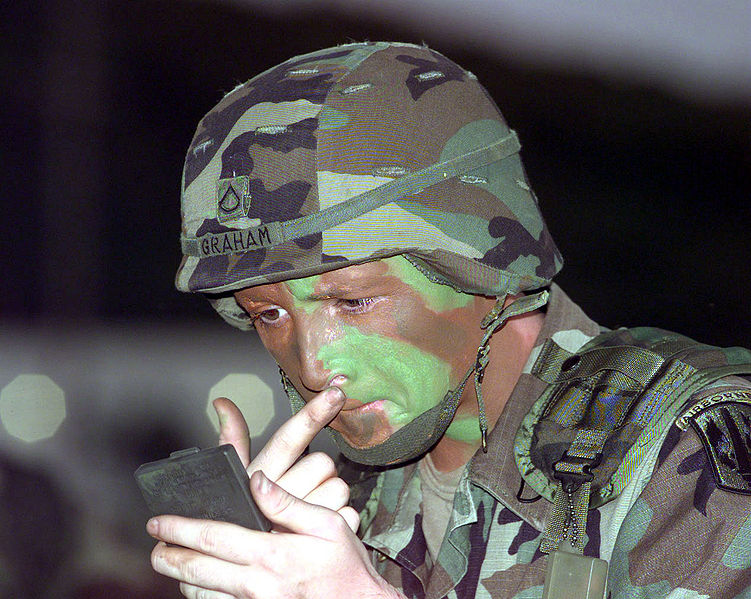
this common in militaries all over the world for soldiers in combat scenarios to paint their faces and other exposed body parts (hands, for example) in natural colors such as green, tan, and loam for camouflage purposes.

Use in professional wrestling

Many professional wrestlers paint their faces as part of their costuming. Examples are The Ultimate Warrior, Road Warrior Animal and his tag team partner, Road Warrior Hawk, and Doink The Clown.

File:Maskowanie.JPEG

In the late 1980s, American professional wrestler Steve Borden, under the stage name Sting, wore colourful striped facepaint as part of his ring attire, in the National Wrestling Alliancce and later, World Championship Alliance. In the mid-1990s, the Sting character was modernised along the lines of Brandon Lee's The Crow, with black and white facepaint usually following a pattern similar to that of a scorpion. Upon joining then Wo  Wolfpacstable in 1998, the facepaint was temporarily altered to red and black.
In 2002,WWE superstar Jeff Hardy began utilizing facepaint in different variations. Upon being drafted to WWE's RAW brand in 2002, Hardy began wearing neon or ultraviolet body paint, that would glow in its colour under UV lighting placed on the entrance stage. Upon entering TNA Wrestling in 2003, Hardy's facepaint took on a more luminous quality, before being quietly retired in 2006, upon his WWE return. In 2008, Hardy resumed using facepaint as part of his ring attire. Hardy continues to use facepaint as a key part of his act, though he no longer wears it in on-screen non-wrestling segments.
In 2007, World Wrestling Entertainment (WWE) Women's Champion Melina was painted gold with glitter flames and barbwire by artist Mark Greenawalt. She posed with her title belt.


File:Stingtna.jpg

Saturday, February 25, 2012

How To Make Body Painting

Body paint is one of the easiest ways to show your support for a team in school, or as a way of decorating your body for dress up events during the holidays. Unlike tattoos, body paint is easy to remove after the event where you will need to paint yourself up. Unlike henna, these come in a wide variety of colors and can even be mixed with lotions and creams to ensure that they are gentle on the skin. Here are the steps to*making your own body paint.
Using body cream
  1. Crush the food coloring tablets. Choose the food coloring tablets of your choice. These are available in most supermarkets, and come in small boxes. Make sure that you crush only a few tablets at a time. Use a mortar and pestle for this.
2.    Add to the body cream. Add the powdered colorants into the body cream. White colored body cream for the hand or body is best for this job, since it will absorb the colors well. Introduce a few crushed tablets into the mixture first, and then mix well. If you need a stronger color, then add more crushed tablets. If you need to lighten up the mixture, on the other hand, add more cream.
3.    Mix well.
·         Store in jars. Store the body cream in small jars. The coloring tablets will not spoil when combined with the body cream, which means that you can prepare various colors days before the event where you will use the body paint. Because this type of body paint is made mainly from body cream, it is also very gentle on the skin and will easily wash off. You can even use your fingertips to apply the paint.
Using kitchen materials
·         Combine solid shortening and cornstarch. You can also make body paint out of solid food shortening, cornstarch, and food coloring. The first step is for you to combine solid shortening and the cornstarch. Usually, one and a half tablespoon of shortening is combined for every 3 tablespoons of cornstarch. Add water and mix well. You should end up with a relatively thick paint base that has no color. If the cornstarch will not mix well or if you want thick paint, you can heat the mixture. The cornstarch will dissolve and become gluey.
·         Add the food coloring. Add the food coloring little by little. Most food colorings available in the market come in small bottles. Add only a few drops first, since these food coloring pigments are very concentrated and can cover a large amount of food.  You can make a large batch of cornstarch and solid shortening base and partition these into smaller containers that will be mixed with different food colorants.
·         Paint on. Use a small brush to apply the body paint into the skin. Make sure, however, that you use the materials within a few hours, because cornstarch will harden when exposed to too much air. Unlike body paint made from creams, this type of pigment can also spoil when not used immediately.
Go ahead and slather on some body paint. Place your team logo on your face, or your school flag on your body using body paint. Afterwards, simple take a warm bath and the pigments will rinse off easily from your body.

Friday, February 3, 2012

Modern Body Painting

The body painting is the expression literally "live the union of art with the human anatomy",and another part is to portray the beautiful. The art is not yet widespread in Brazil, but is strong in countries such as Australia, Germany and France, where, incidentally, a very tender valued by artists engaged in this painting. In Portugal is already much seen and even are shops where you can go and do one.

The body painting, also called the makeup artist (or body painting, in English), each part of the body turns into an element of work, whose result is the beauty of the whole. 

The makeup artist is different from the makeup of characterization (theater, cinema or TV) mainly because the concern is not to transform a person in character, but cause a visual effect, an expression of beauty. The body painting stems, of the effects obtained with plastic visual elements as line, shape, color, volume and texture, as well as the principles of organization, composition, balance, harmony, rhythm and movement. The technical field of the design is one of the fundamental tools to perform this work. 

In body painting, the makeup artist explores the sensitivity and creativity together with techniques of artistic composition, drawing, painting and cosmetics specific, appropriate to the practice of art. Before the resources available today, one of the ways that artists use to tackle the paint for the body of water was mixed with paste food coloring, or baby oil or almonds with pigments. Unfortunately almost all products used today for the makeup artists are imported and expensive. Therefore some aberrations occur in the use of some paintings based on the oil paint with latex and to the consequent burning of the skin, allergies and other symptoms. 

The makeup used on body painting should be made with water neutral folder, so non toxic, and non toxic if eaten. Even so, the red should be avoided in the eyes and mouth, since the pigment that results in color comes from an insect produced in a laboratory. 
A disadvantage of body painting, is that it is an ephemeral art. It takes hours to be designed, outlined the role, embodied in human anatomy and, if not registered as a photographic image or film, no one else can admire it. 


Saturday, January 7, 2012

Types of Body Painting

Before using body paint, it is important to know which ones last the longest and look the best. And for anyone who does not think body paint applies to their everyday life, there is also a surprising factoid about those jars in your cabinet or purse.


Henna


Henna paint is derived from the leaves of a plant and has been used for centuries to dye hair and wool. A henna tattoo can last for weeks, but the fading process can be sped up by exfoliating or by coming into contact with chlorine. Although henna is natural, since it is plant-based, a lot of ready-made henna mixes have metal additives. Like the lead in the previous section, these metals can seep through the skin and cause damage.


Airbrush Tattoos


These temporary tattoos are applied by with an airbrush gun and are waterproof, so they last up to two weeks. Usually a stencil of the chosen design is placed over the area, providing a high level of detail in multiple colors. Some people use airbrush tattoos as a trial run before getting a permanent tattoo. Either oil-based paint or water-based paint can be used in the airbrush tattoo applicators.


Water-Based Body Paint

Water-based body paint will need quire more frequent touch-ups and more attention than other types of body paint. Water-based body paint tends to rub off, crack and be susceptible to sweat.


Liquid Latex and Oil-Based Paints


Liquid latex can look convincingly like clothing. It is not especially messy once it sets because it binds well to the skin. However, it is important to make sure that the person does not have a latex allergy before using it. Oil-based paints (also known as alcohol-based paints) are sturdier than some other types since they are waterproof and sweat-proof. If you need something to last more than one day but less than a week, oil-based paint is a good choice.
Liquid latex and oil-based paints are similar because they can be hard to remove if you don't make the necessary preparations. Use a moisturizing cream before applying the body paint, and then use a lotion with mineral oil to remove the paint. This will ensure the body paint comes off easily and completely.